Air AND Maritime Command AND Control PLATFORM
UX/UI DESIGNA redesigned command and control platform experience focused on improving usability, clarity, and operational efficiency across complex air and maritime workflows.
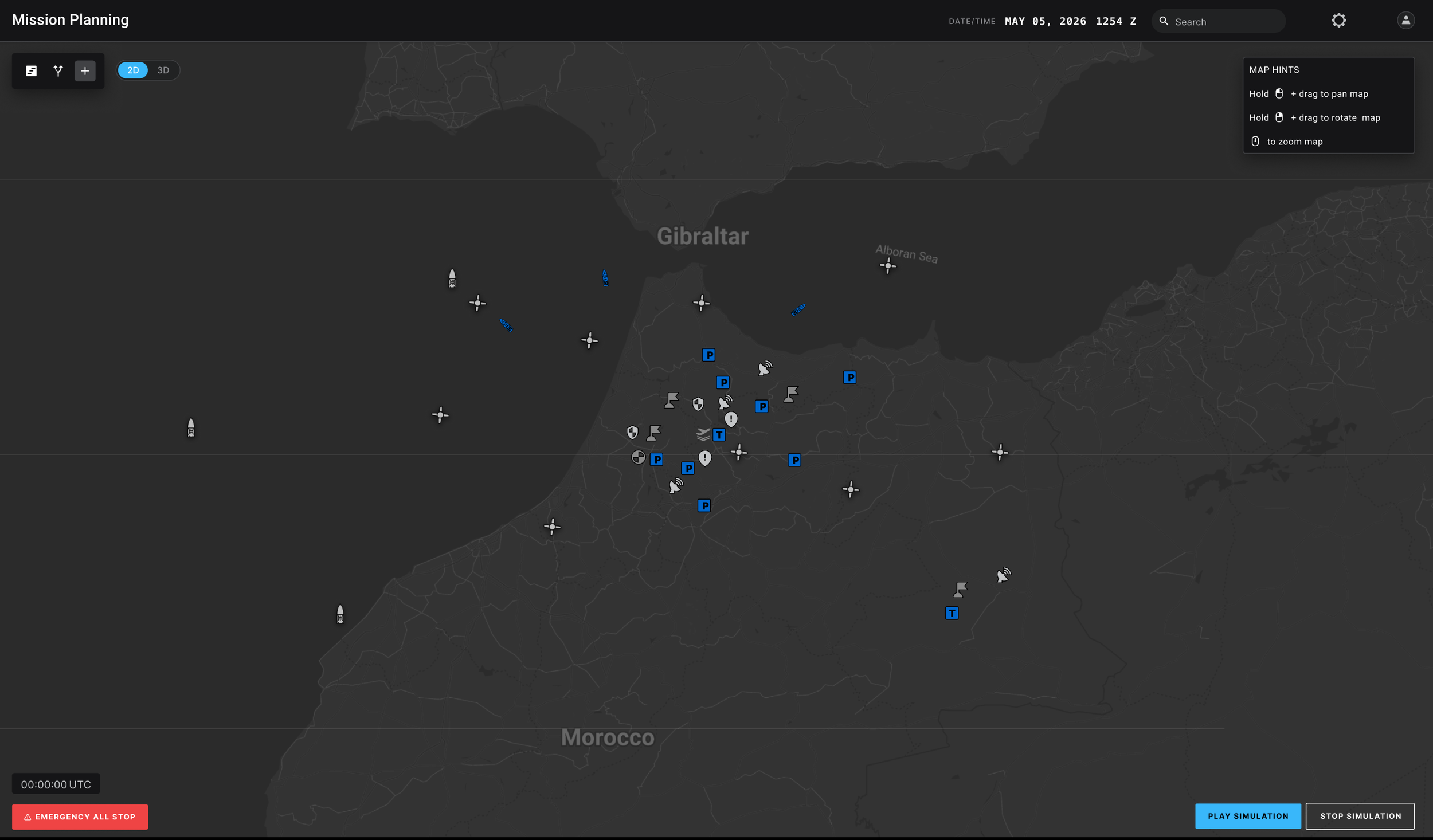
For this project, I redesigned the platform’s user interface to align with Hypergiant’s CORE design system, creating a more consistent, scalable, and intuitive experience across mission-critical environments. The redesign focused on modernizing the visual language, improving information hierarchy, and simplifying complex data interactions for users who rely on fast, accurate decision-making.
To protect client confidentiality, all proprietary information, real-world data, and operational details have been removed or replaced with representative content. The work shown is a UI/UX exploration of the design approach, system thinking, and interface improvements rather than a representation of live mission data.
TOOLSFigma, Design Systems
TIMELINESeptember 2025 - March 2026
COMPANYForward Slope, Inc.
The Challenge
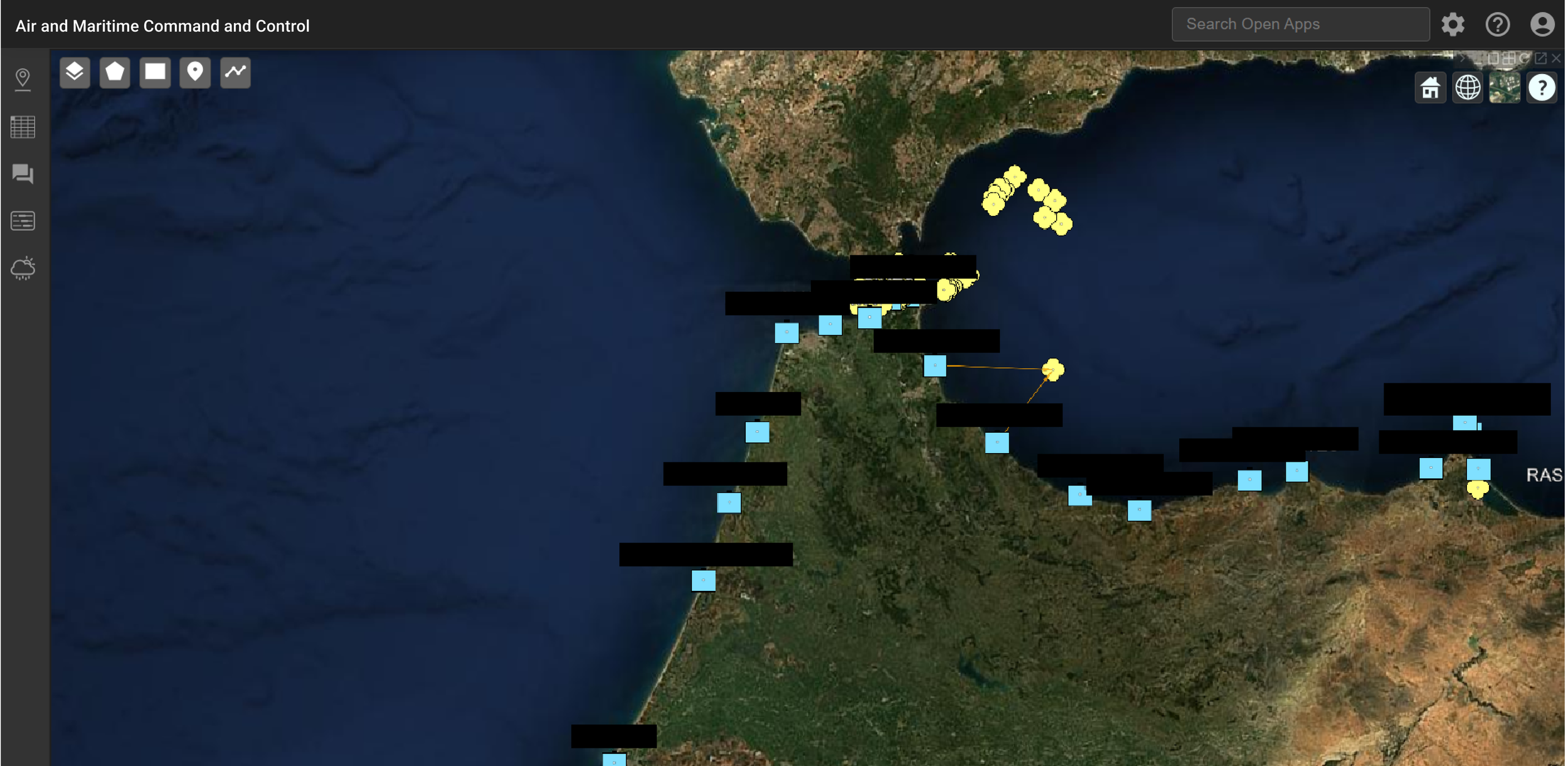
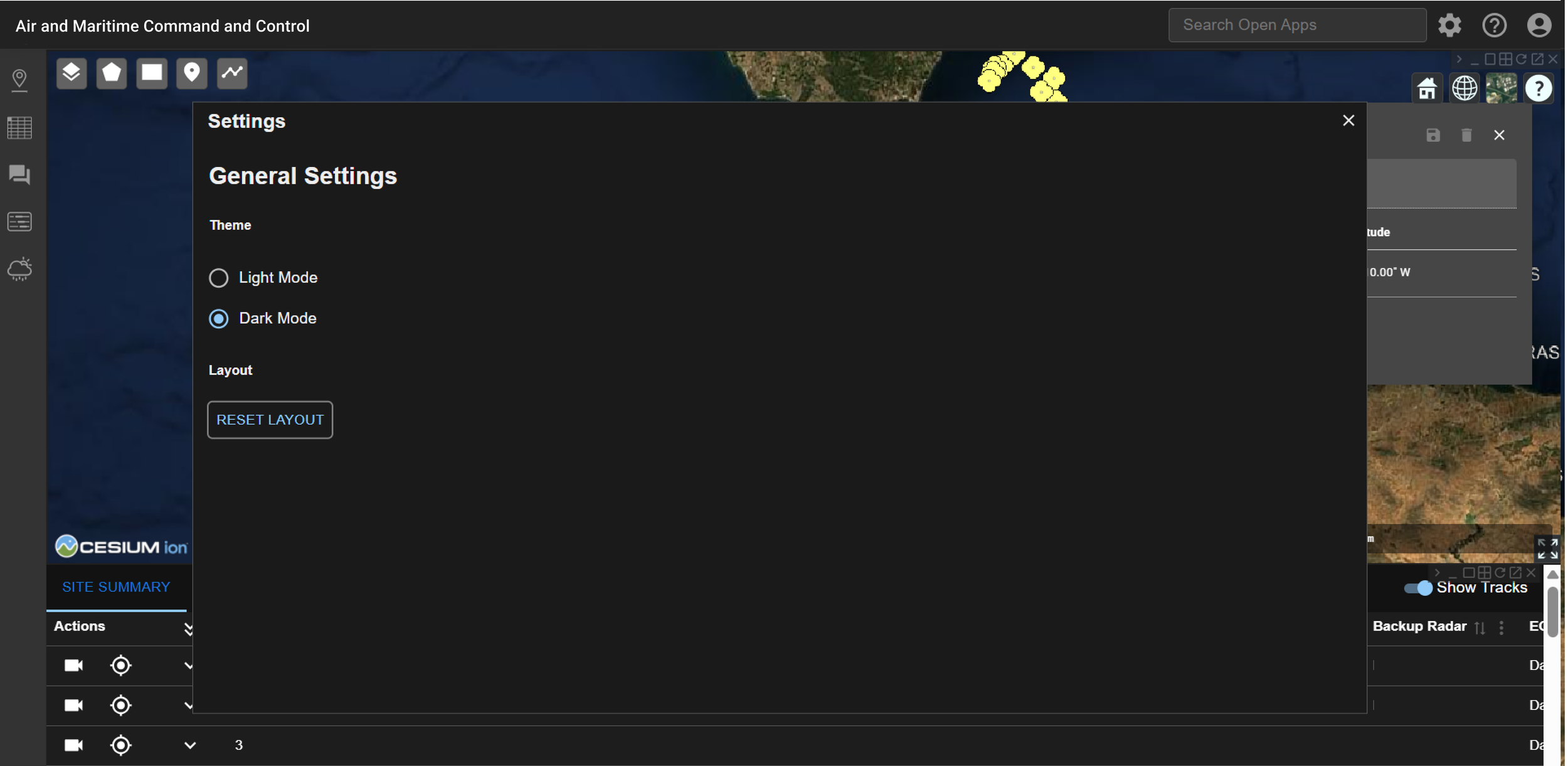
The existing command and control platform was powerful, but its interface had become difficult to use. Operators were required to process large amounts of mission-critical information through a cluttered UI that lacked visual hierarchy, making it challenging to quickly locate information and complete tasks efficiently.
Navigation was inconsistent, workflows were fragmented, and key actions often required unnecessary steps. In high-pressure operational environments where speed and accuracy are essential, these usability issues increased cognitive load and slowed decision-making.

Brand Identity
To complement the platform redesign, I created a new logo that reflects the purpose and capabilities of the command and control system while aligning with its modern interface.
The mark combines geometric forms to suggest movement, direction, and coordination, representing the flow of information between air, maritime, and autonomous assets. The angular shape conveys precision and strength, while the forward-pointing form symbolizes situational awareness, navigation, and mission execution. A bold blue palette reinforces trust, technology, and reliability within a mission-critical environment.
The logo was designed to be clean, scalable, and recognizable across the platform, from the application interface and loading screens to documentation and presentations.
ui re-DESIGN
The goal of this redesign was to create a more modern, scalable, and user-focused interface for a complex command and control environment. I focused on improving the overall user experience by applying Hypergiant’s CORE design system, establishing stronger visual consistency, and refining key interaction patterns across the platform.
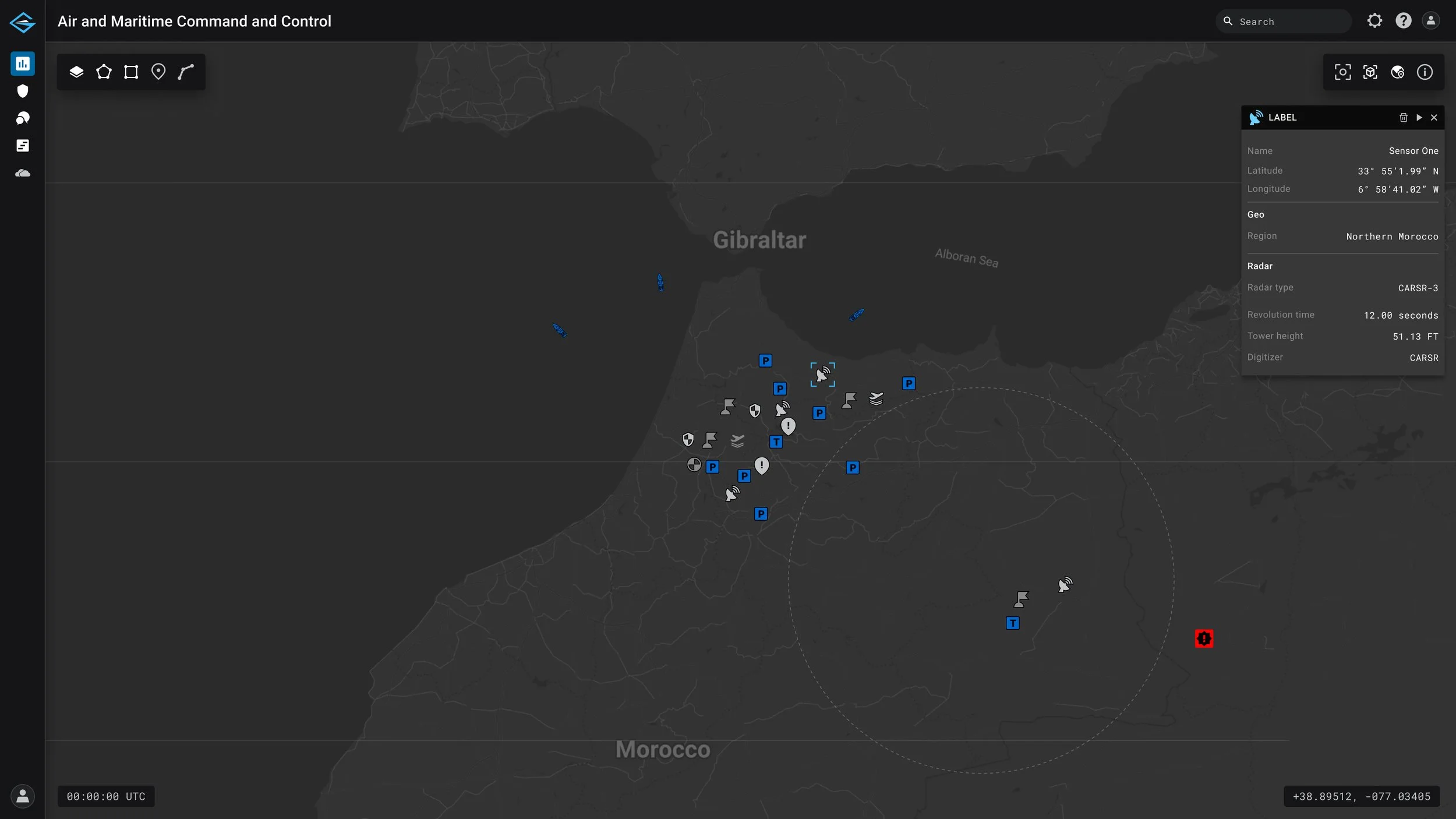
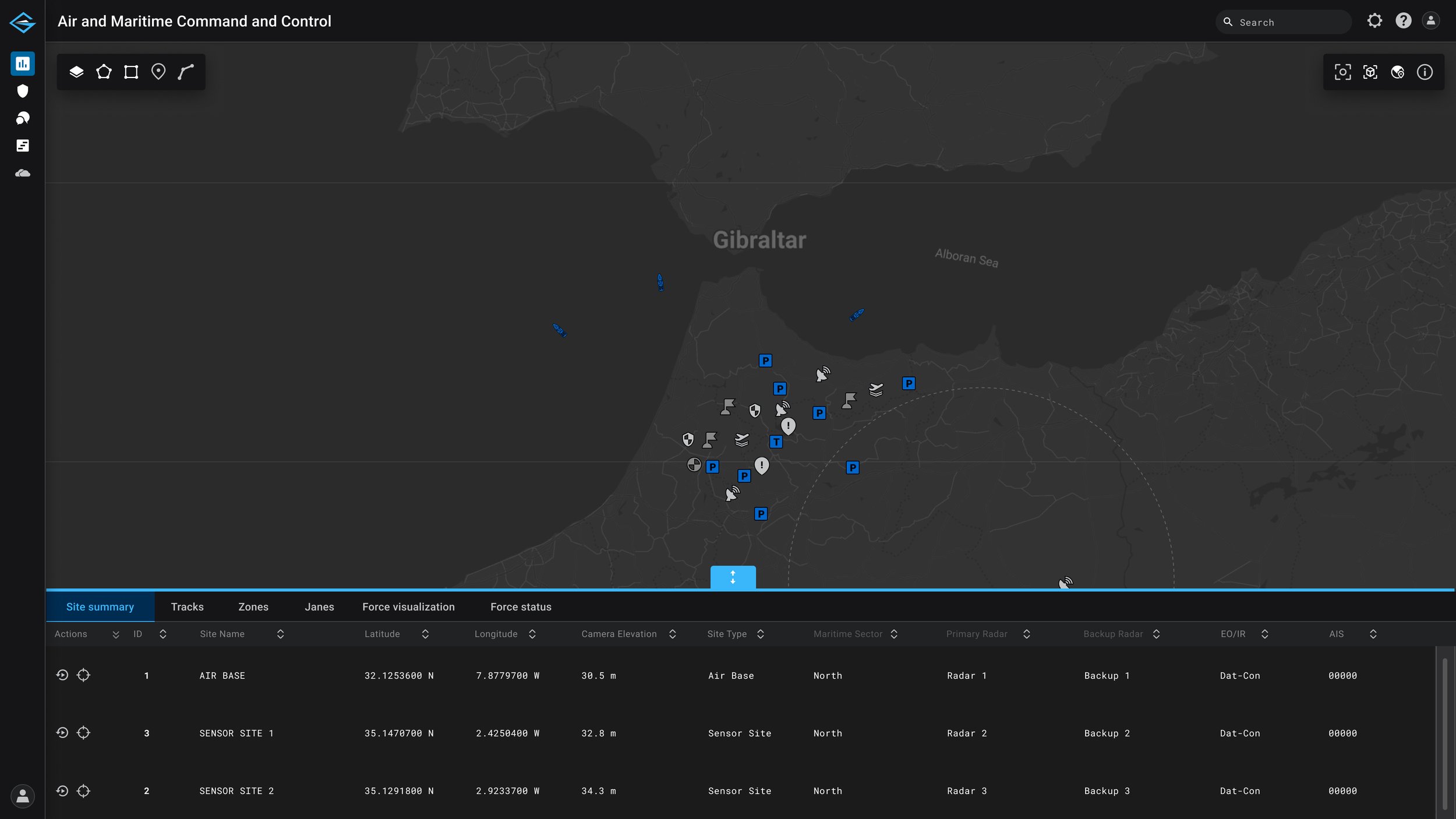
User Personas
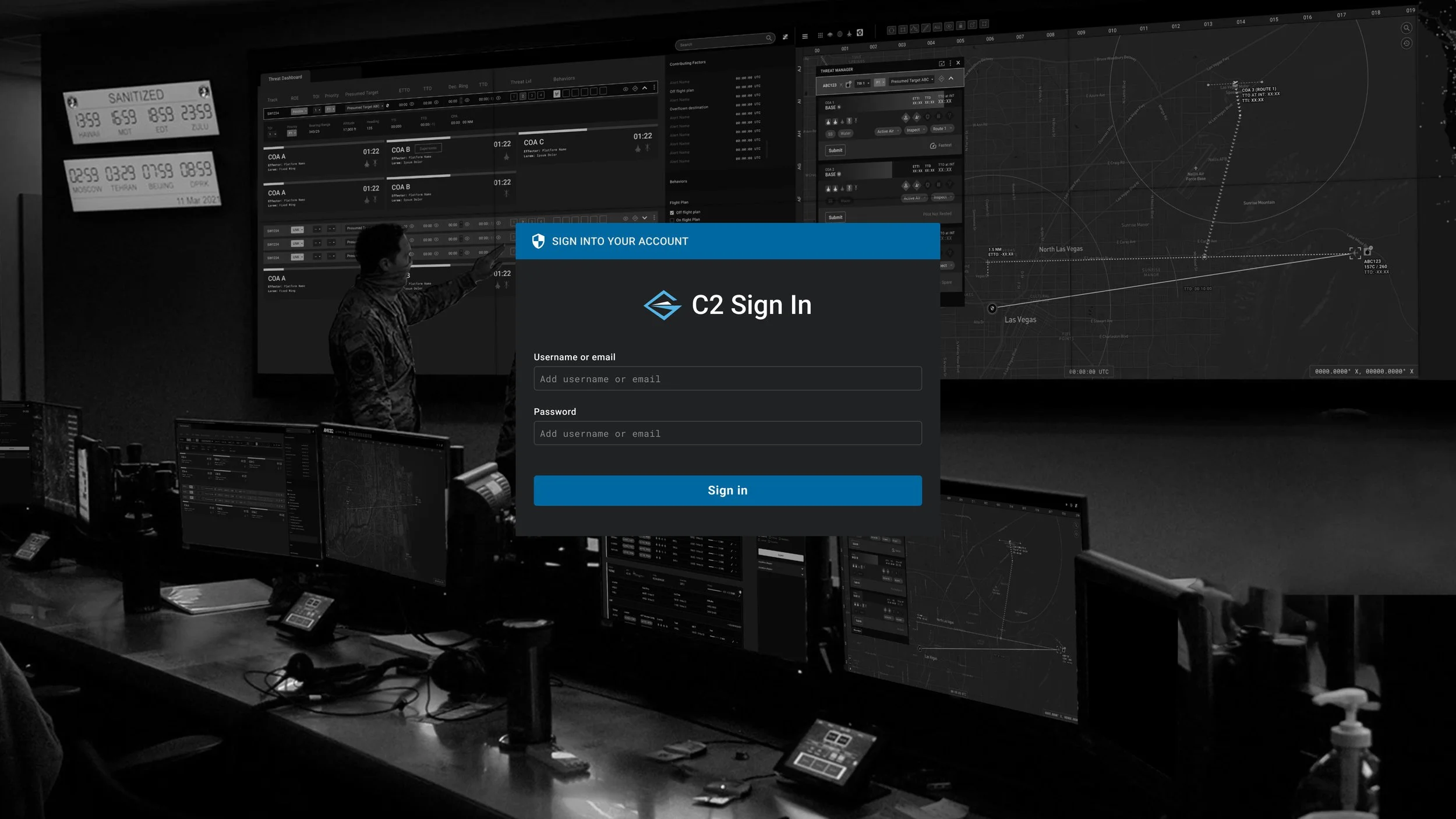
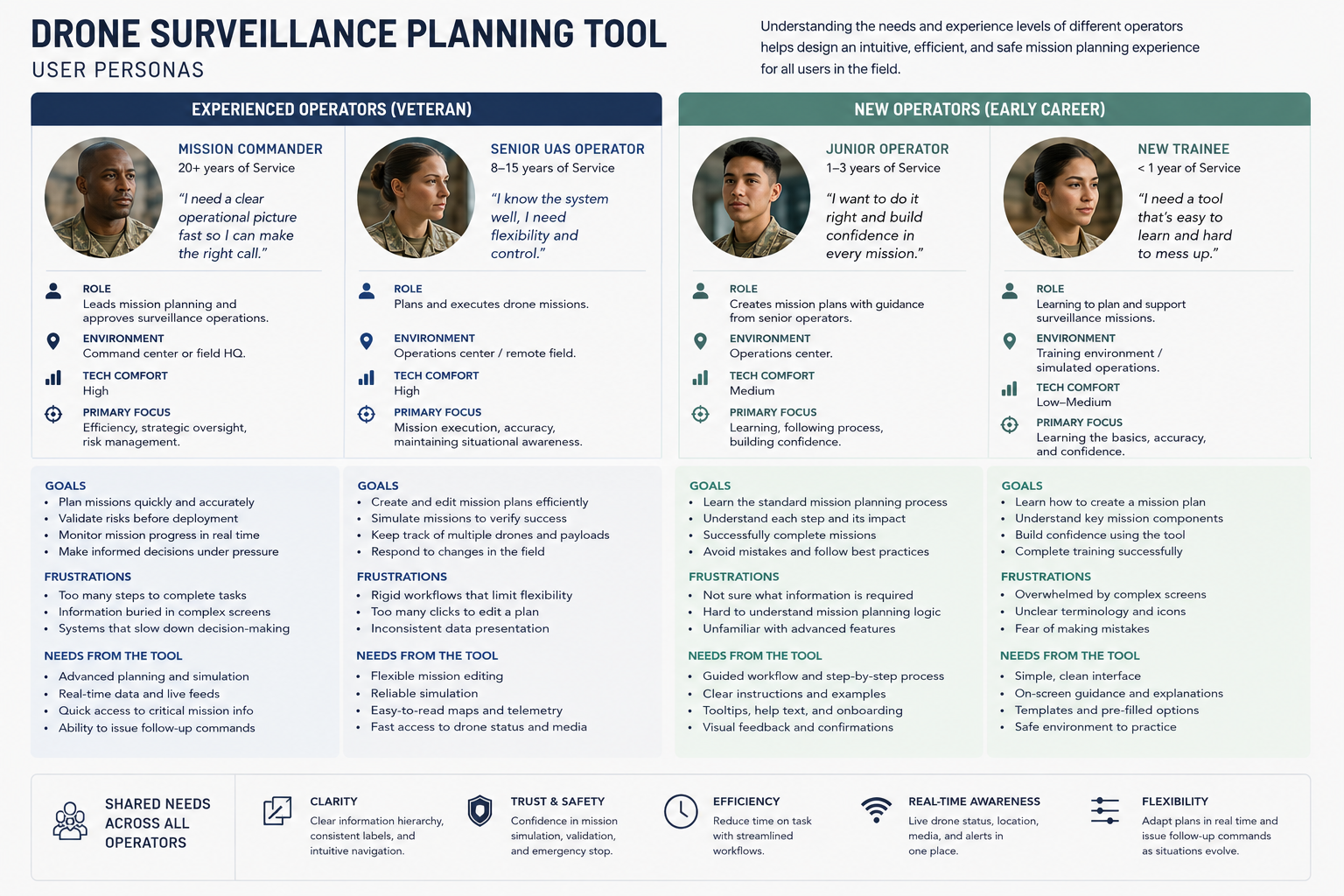
I mapped out the different user personas who interact with the tool. I then interviewed subject matter experts to better understand their workflows, needs, and pain points. This research revealed two operator personas at opposite ends of the experience spectrum: the veteran operator, who is highly efficient with legacy systems but more hesitant to adopt unfamiliar interfaces, and the new operator, who is comfortable with modern software but benefits from additional guidance and confirmation throughout the mission-planning process.
Drone Surveillance Planning Tool
Storyboarding & Wireframing
Key outcomes:
Defined the end-to-end drone mission planning workflow.
Simplified a complex, multi-step planning process into an intuitive guided experience.
Validated navigation, task flow, and information architecture before visual design.
Established the foundation for the high-fidelity interface built using Hypergiant's CORE design system.
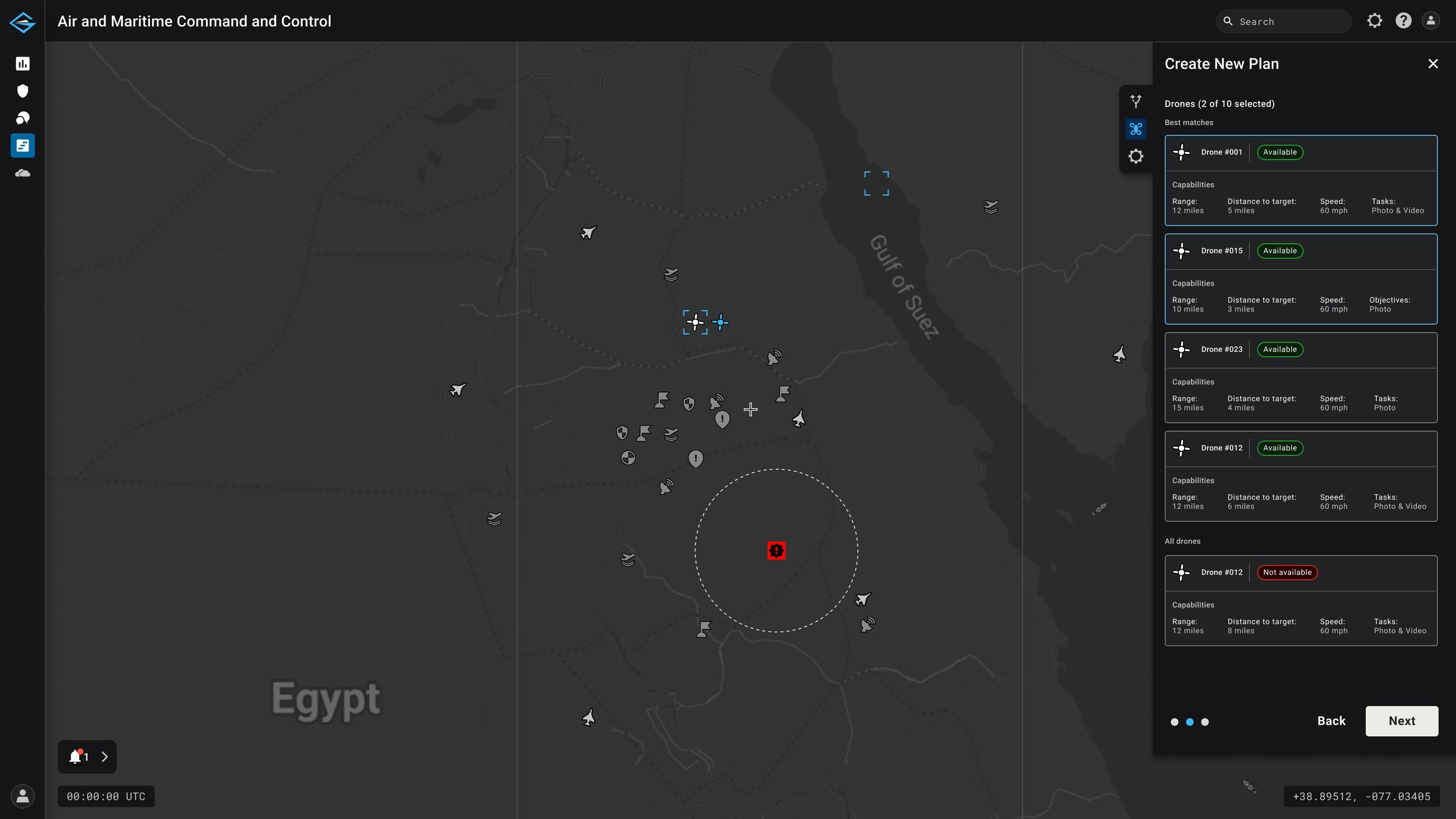
As part of the platform redesign, we explored a new Drone Surveillance Planning feature that enables operators to plan, simulate, and manage autonomous drone missions within the command and control environment.
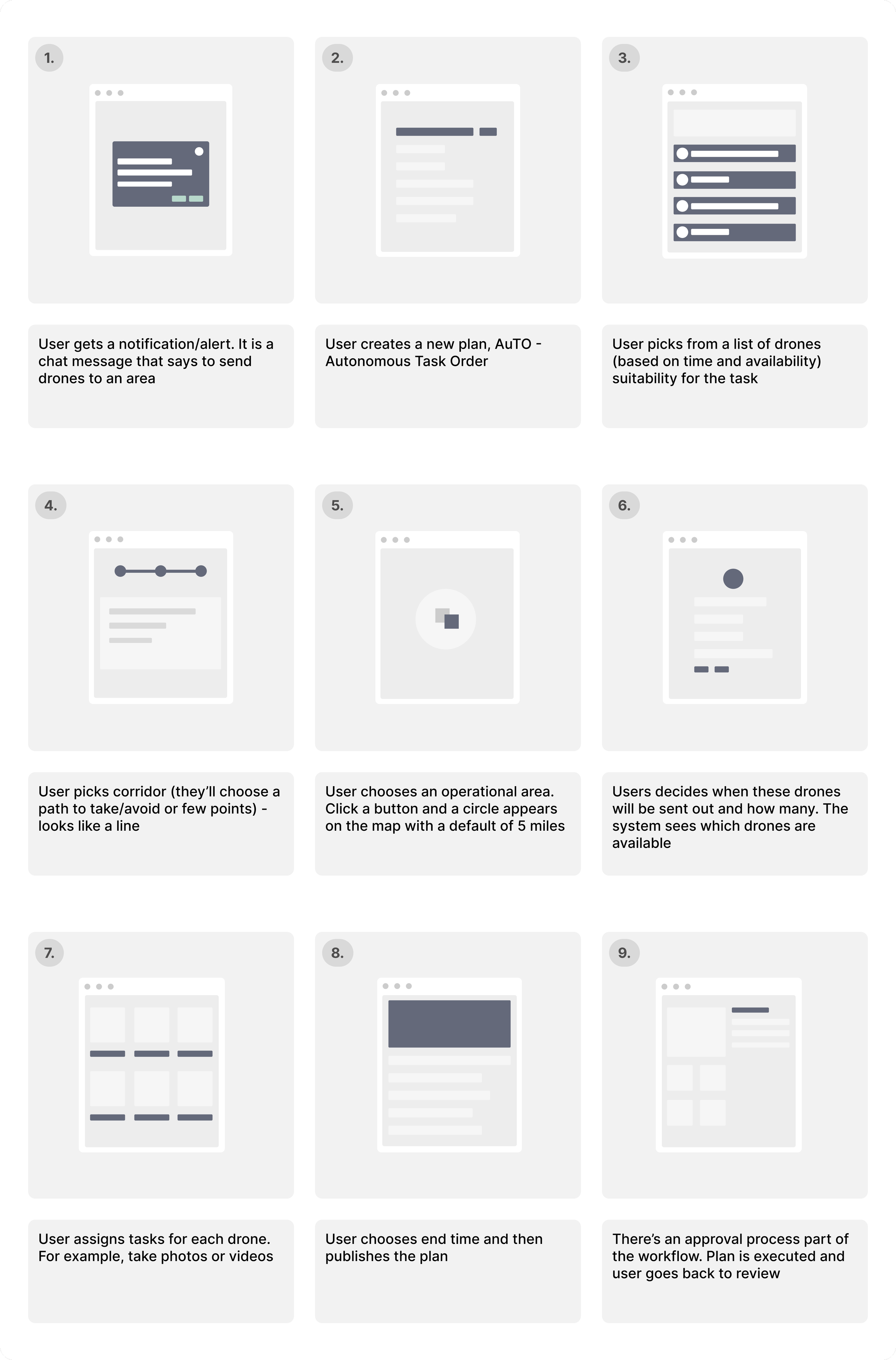
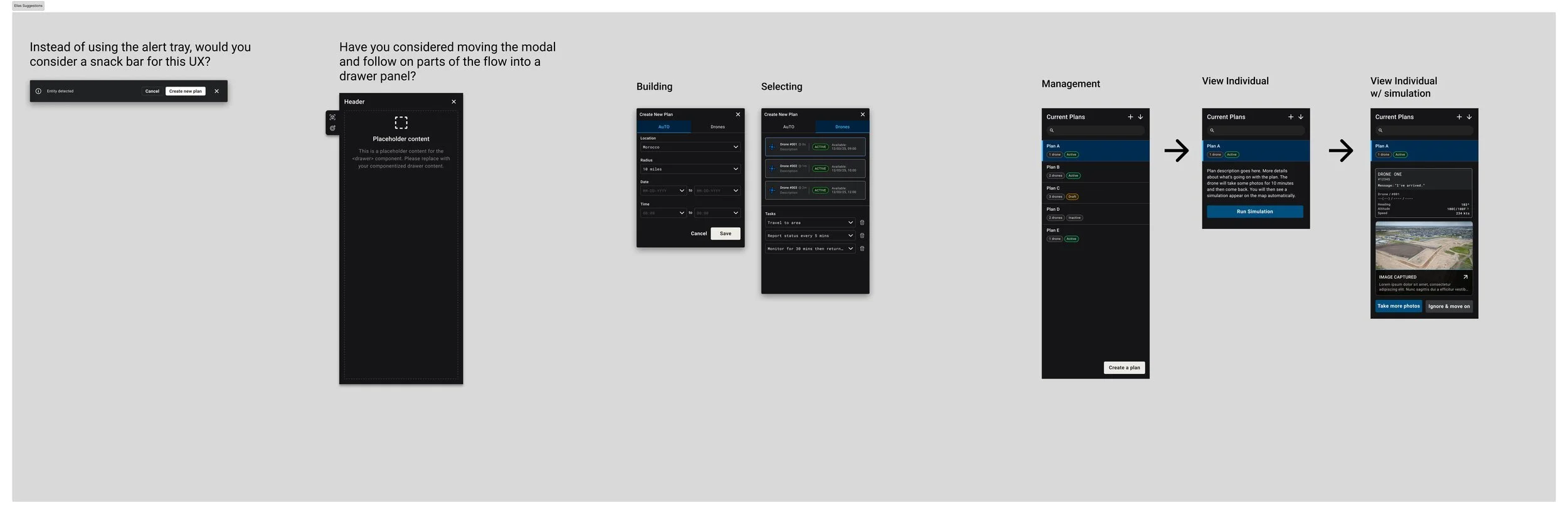
Before moving into high-fidelity designs, I mapped the end-to-end user journey through storyboards and low-fidelity wireframes to validate the overall workflow and mission planning experience.
The storyboard helped define each step of the operator's journey, from receiving a surveillance request to planning, assigning drones, publishing the mission, and monitoring execution. This process ensured the workflow aligned with real operational tasks while identifying opportunities to simplify complex planning decisions.
The wireframes translated these concepts into a functional interface, focusing on layout, navigation, and information hierarchy before visual design. By testing the experience early, I was able to iterate on interactions, reduce cognitive load, and establish a scalable foundation for the final UI.
Design Iteration and Feedback
Key outcomes:
Designed high-fidelity UI aligned with Hypergiant's CORE design system.
Collaborated with cross-functional teams through multiple design reviews.
Iterated on layouts, interactions, and workflows based on stakeholder feedback.
Refined the experience to improve clarity, efficiency, and usability for mission planning.
Initial Prototype
Main Improvements:
Mission Simulation: Test and validate drone missions before execution.
Emergency Stop: Instantly halt all active drones in emergency situations. Improved confidence: Verify mission plans prior to deployment.
Enhanced operational safety: Give operators greater control during both planning and execution.
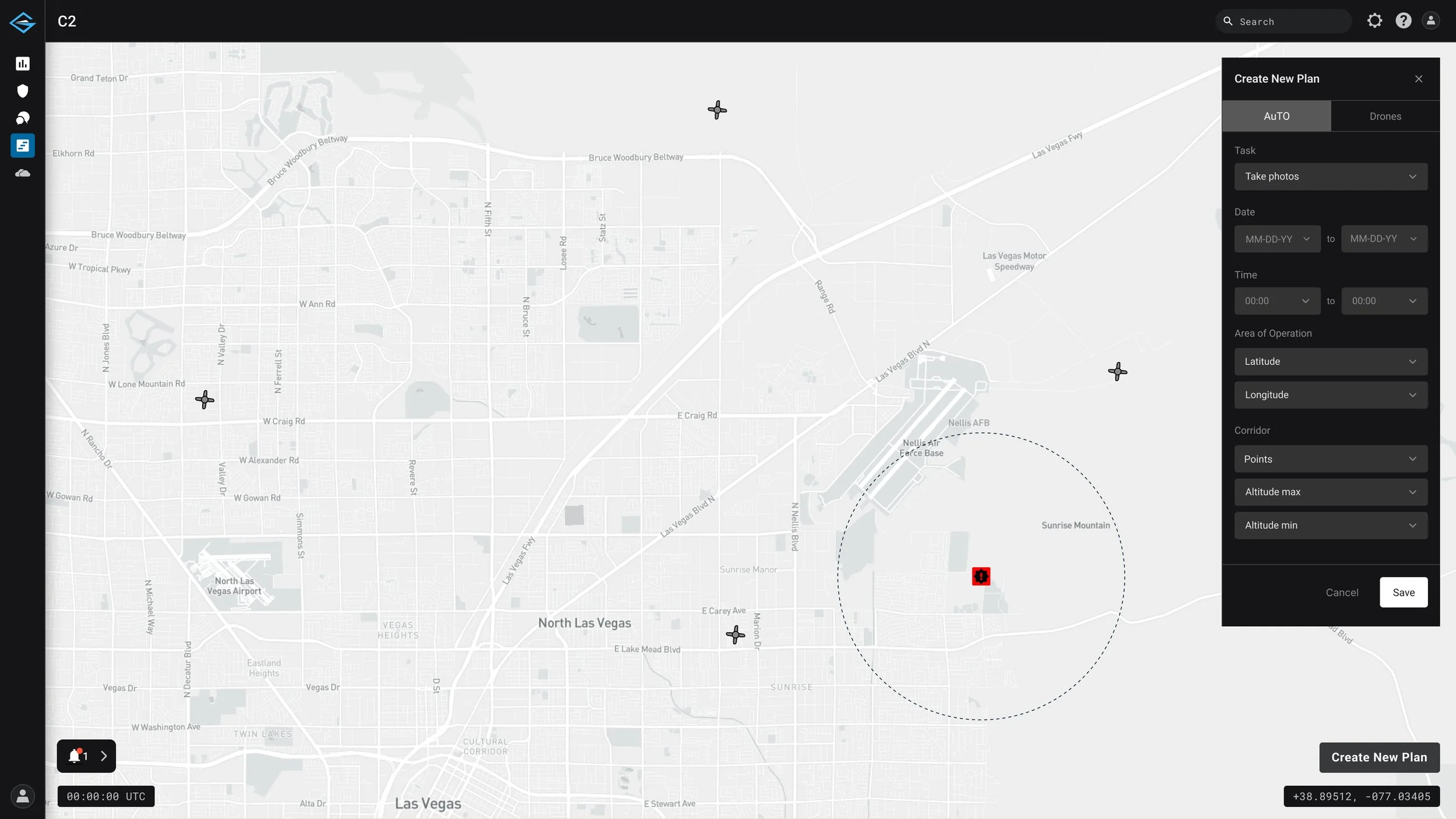
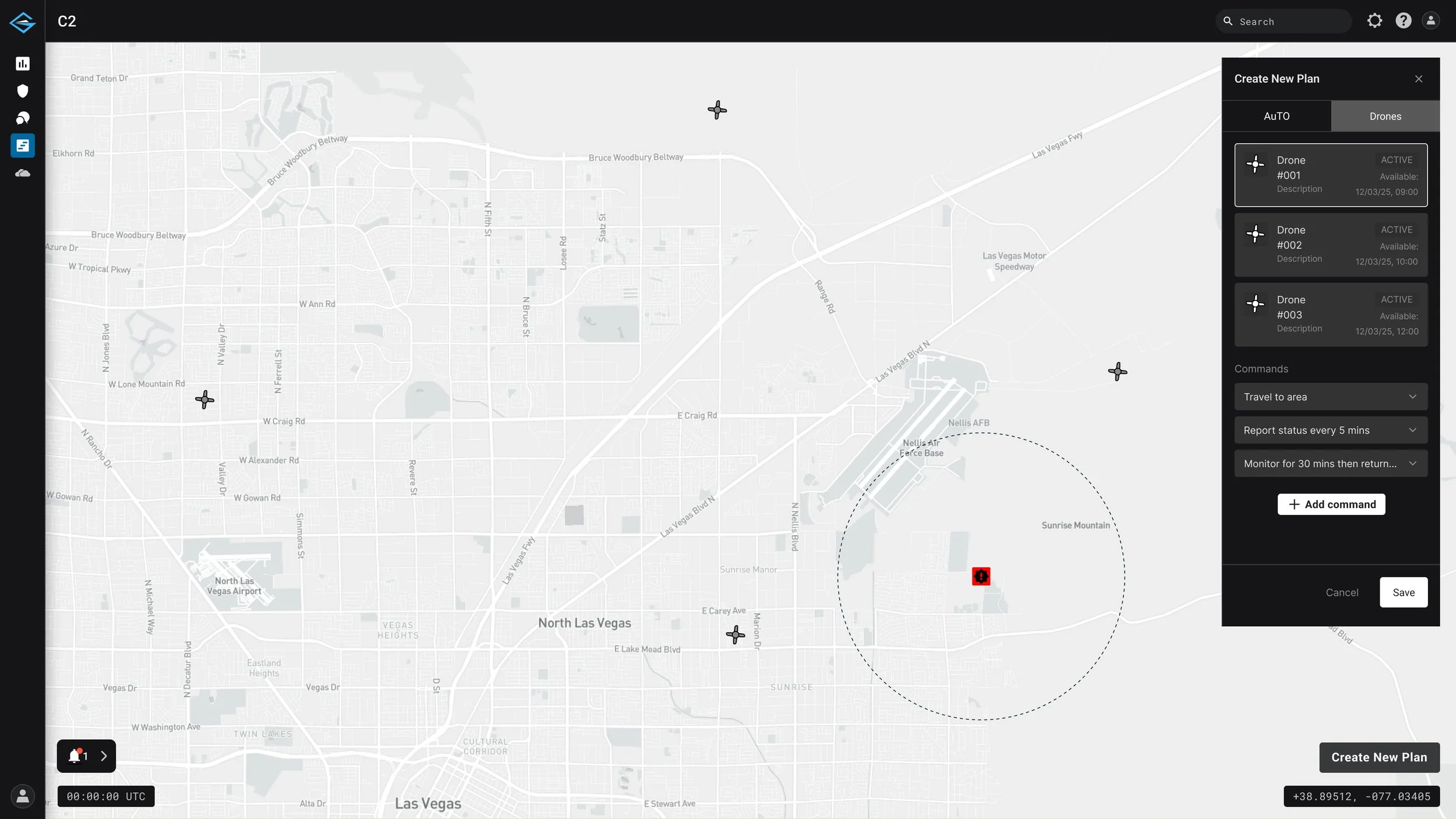
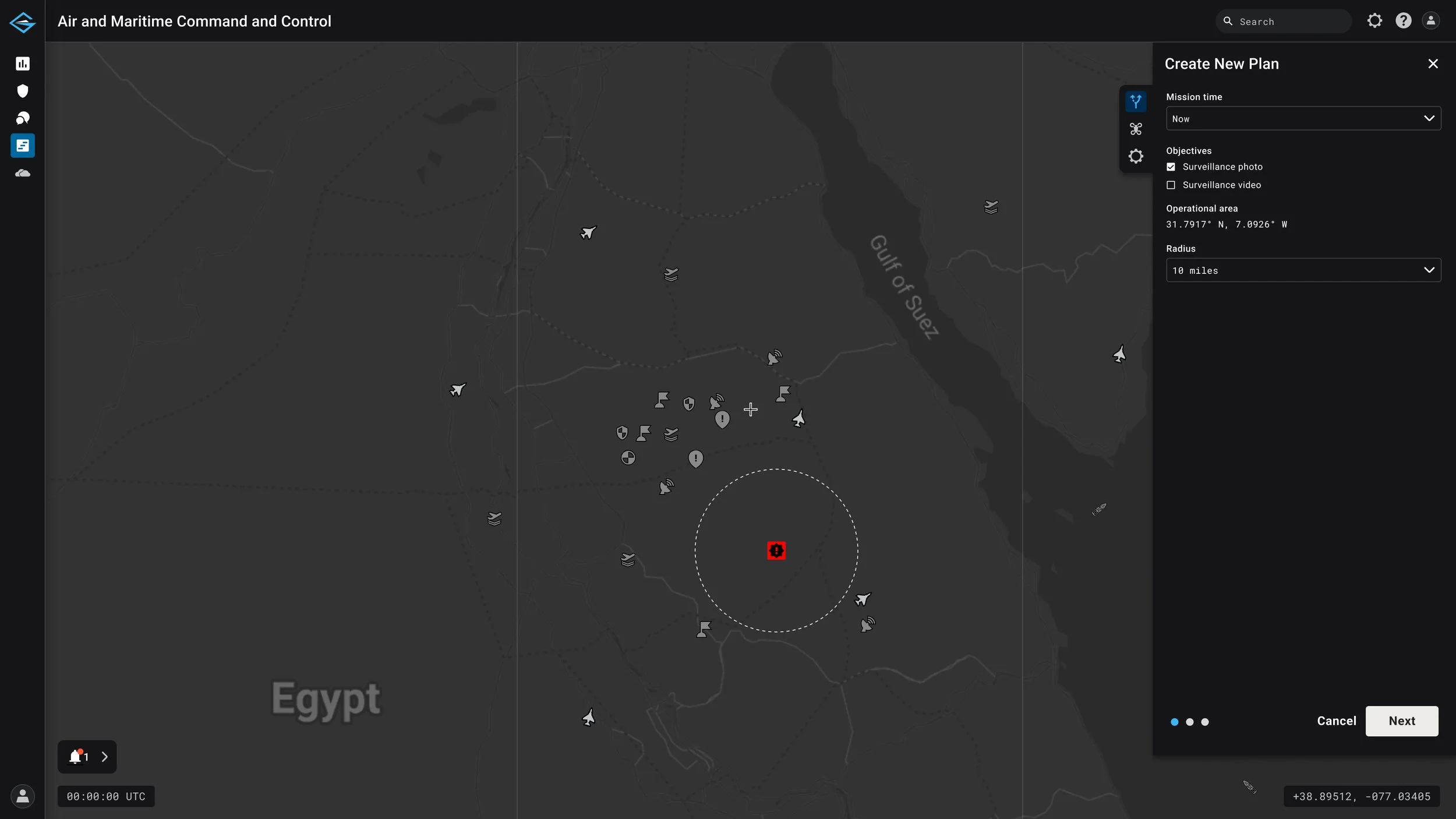
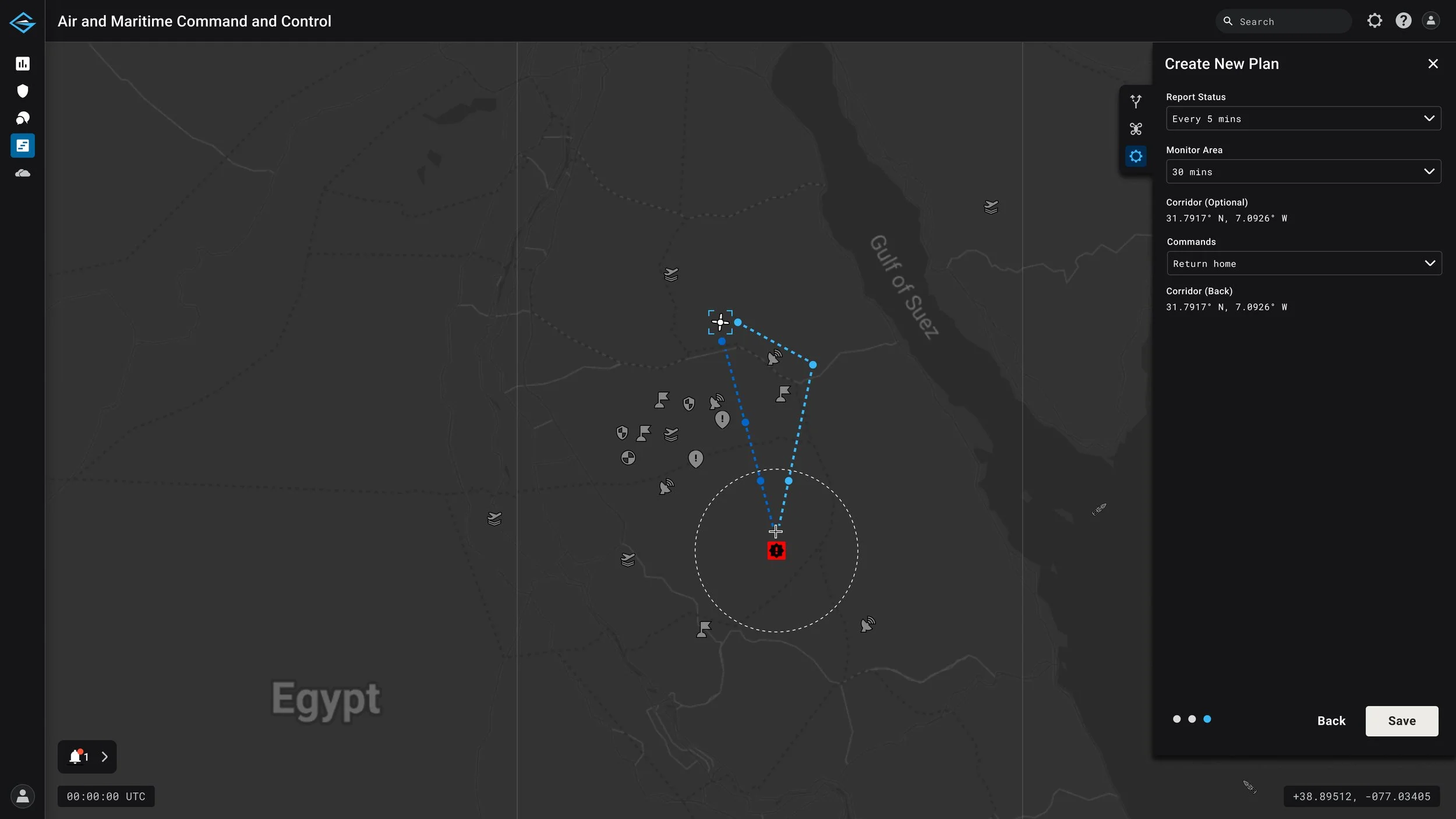
With the workflow validated, I translated the wireframes into high-fidelity designs using Hypergiant's CORE design system. The focus was on creating a clean, consistent interface that supported complex mission planning while remaining intuitive for operators working in time-sensitive environments.
Throughout the design process, I collaborated closely with product managers, engineers, and stakeholders to gather feedback and refine the experience. Regular design reviews helped validate assumptions, identify usability improvements, and ensure the solution met both user needs and technical requirements.
Each round of feedback informed iterative updates to the interface, improving navigation, reducing unnecessary complexity, and strengthening the overall user experience before moving toward implementation.
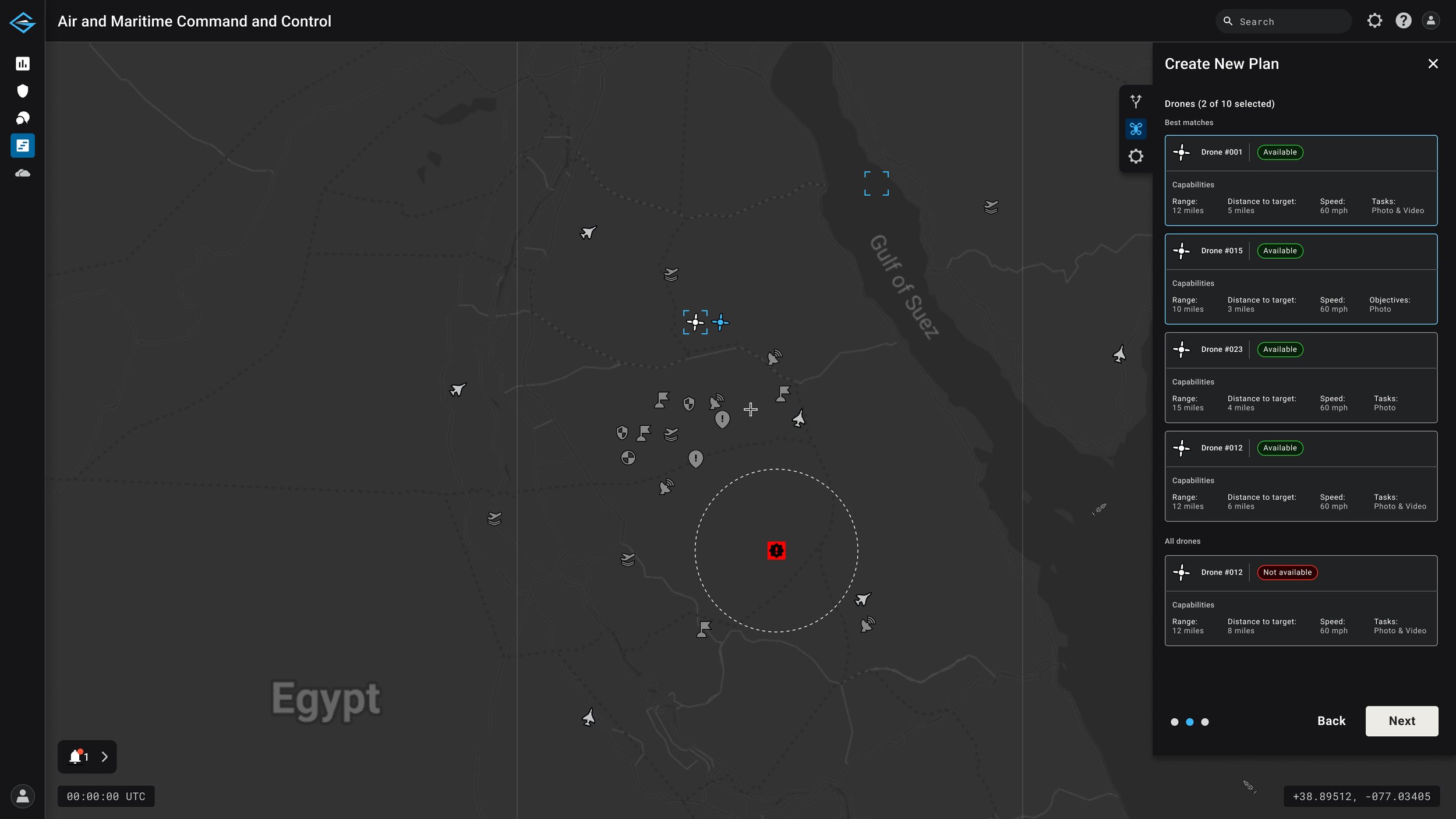
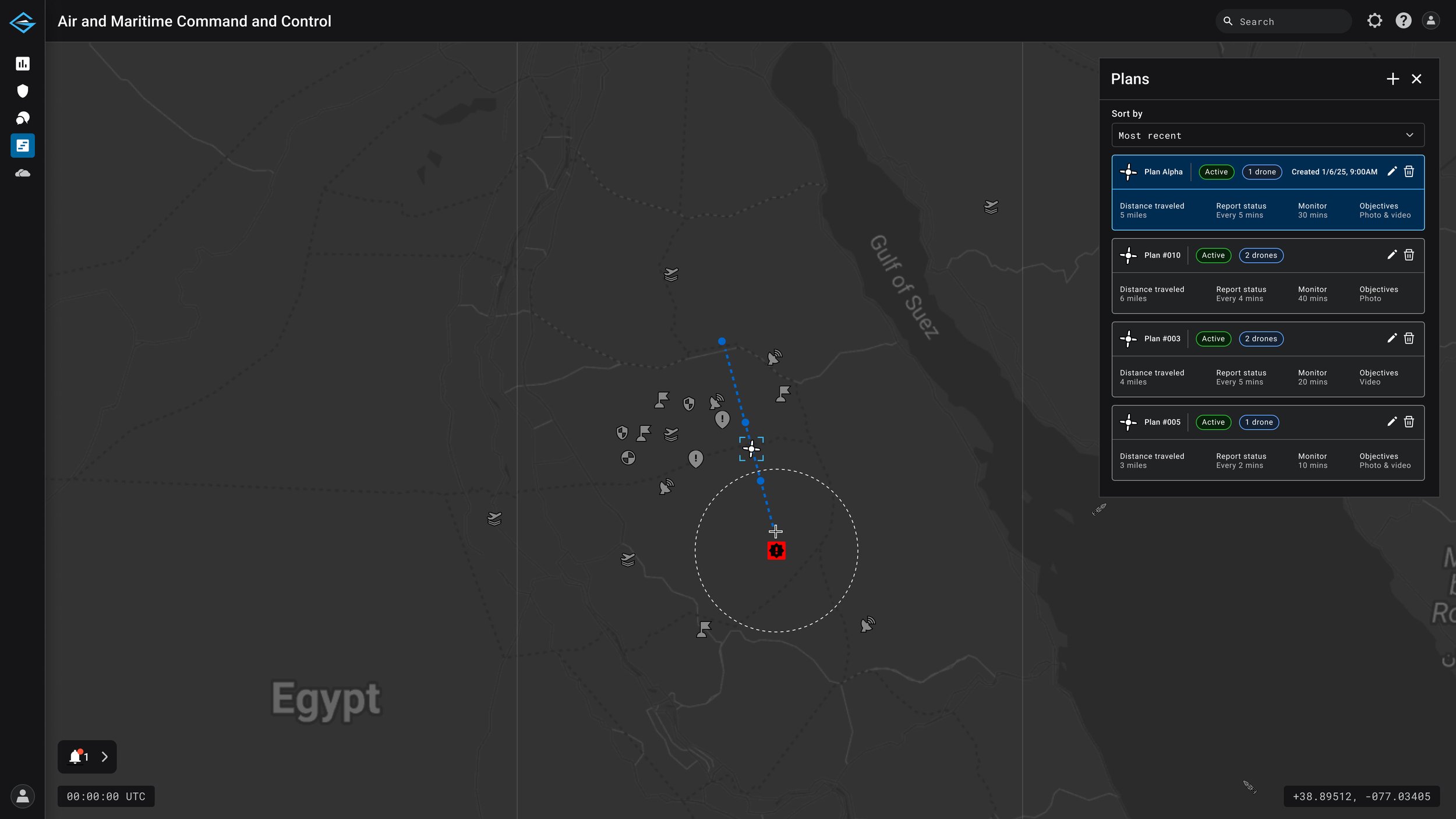
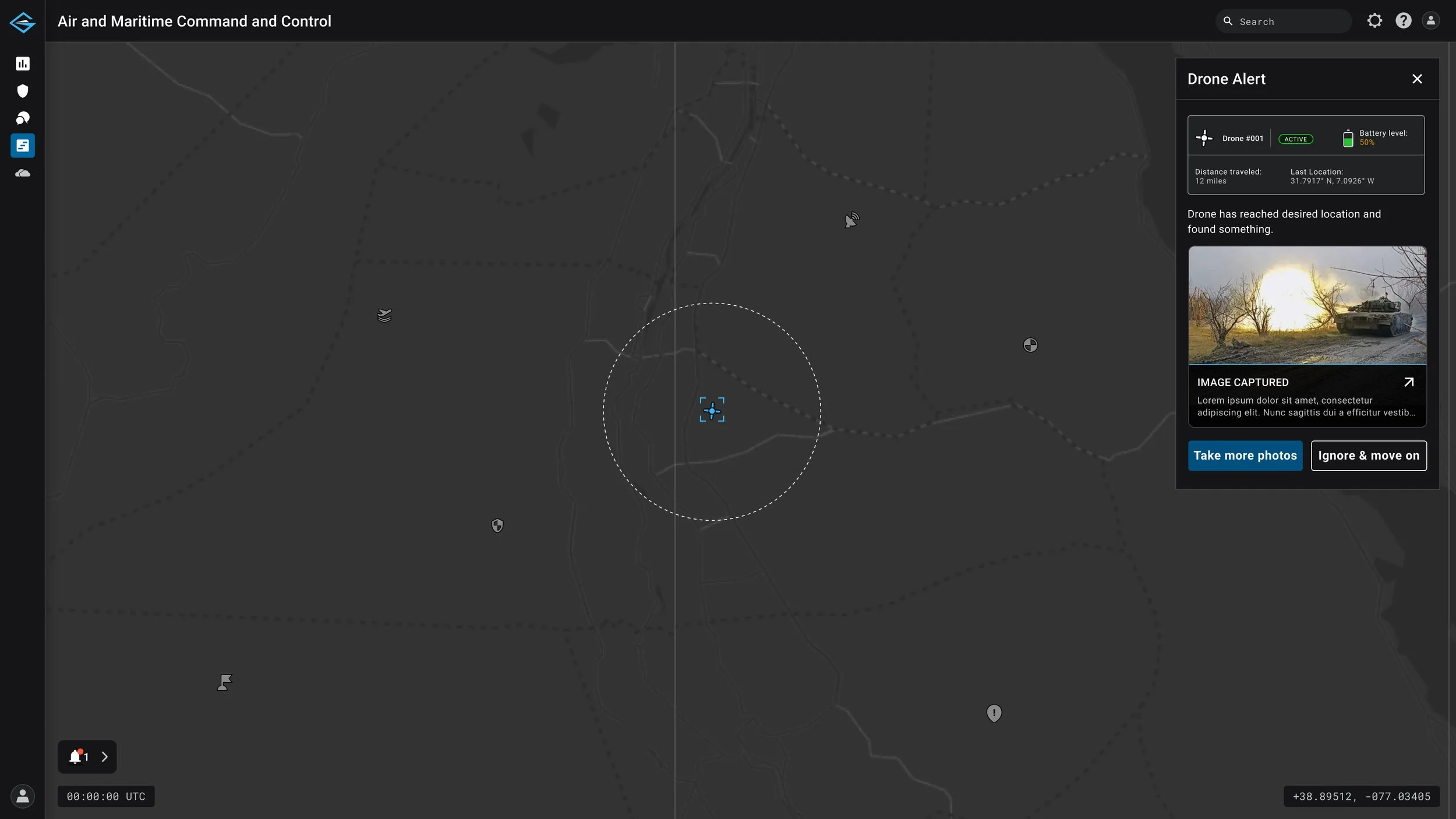
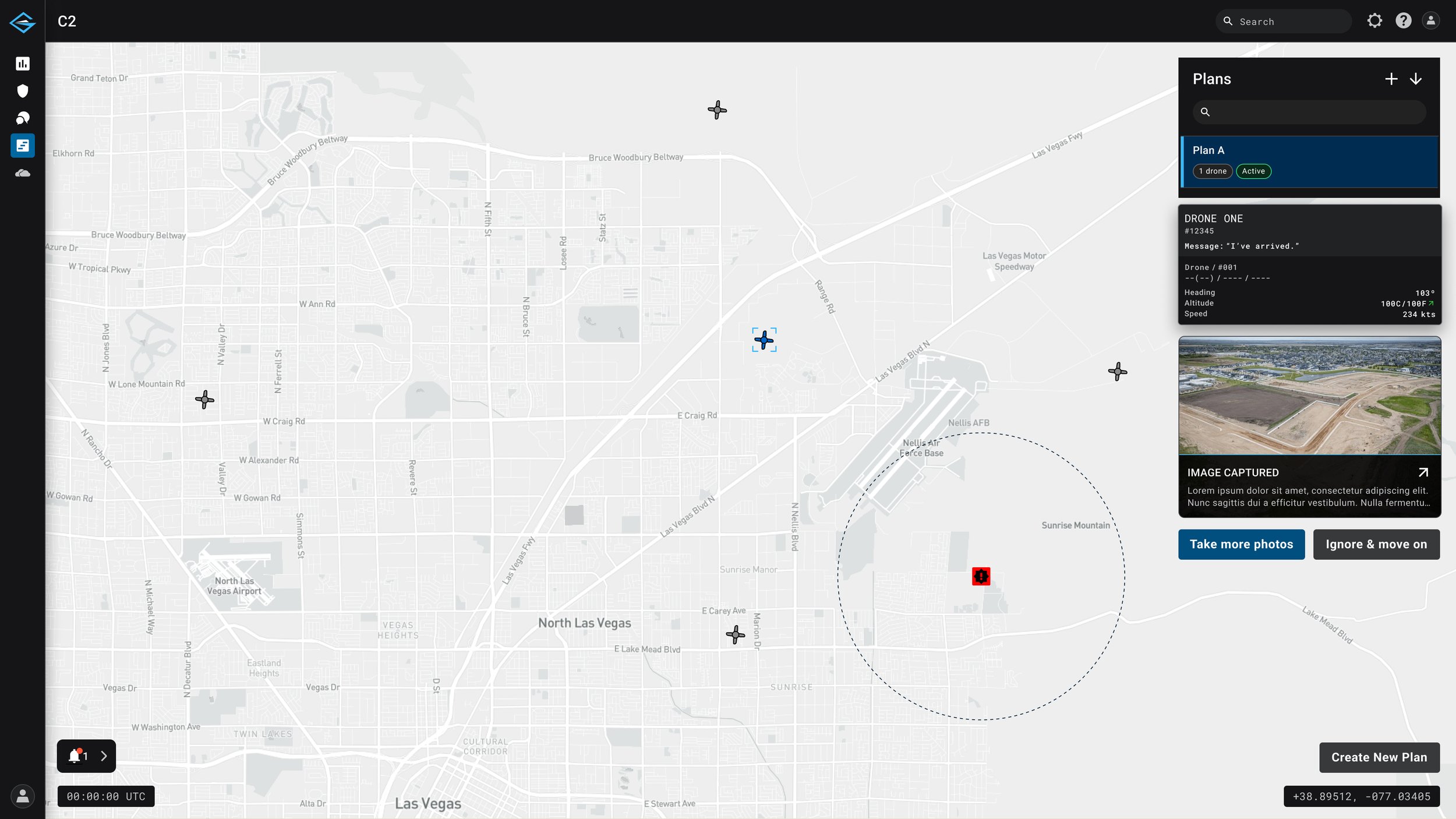
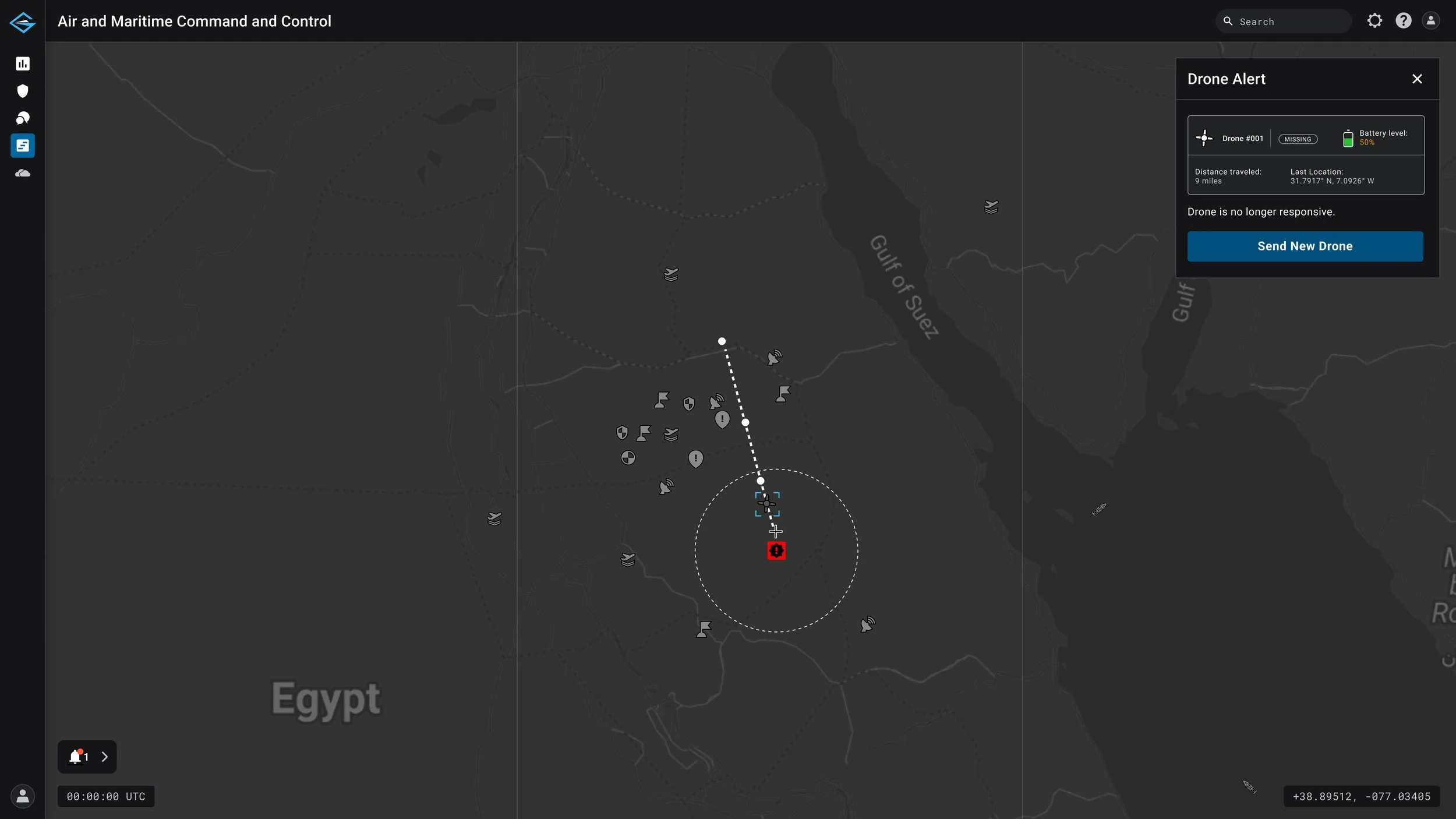
The first iteration focused on creating a streamlined workflow for planning and executing autonomous surveillance missions.
Key capabilities included:
Create, edit, and save drone mission plans.
Respond to surveillance requests from alerts or map activity.
Simulate missions before deployment.
Receive real-time drone status, location, photos, and video.
Send follow-up commands during a mission, such as capturing additional imagery or continuing to the next objective.